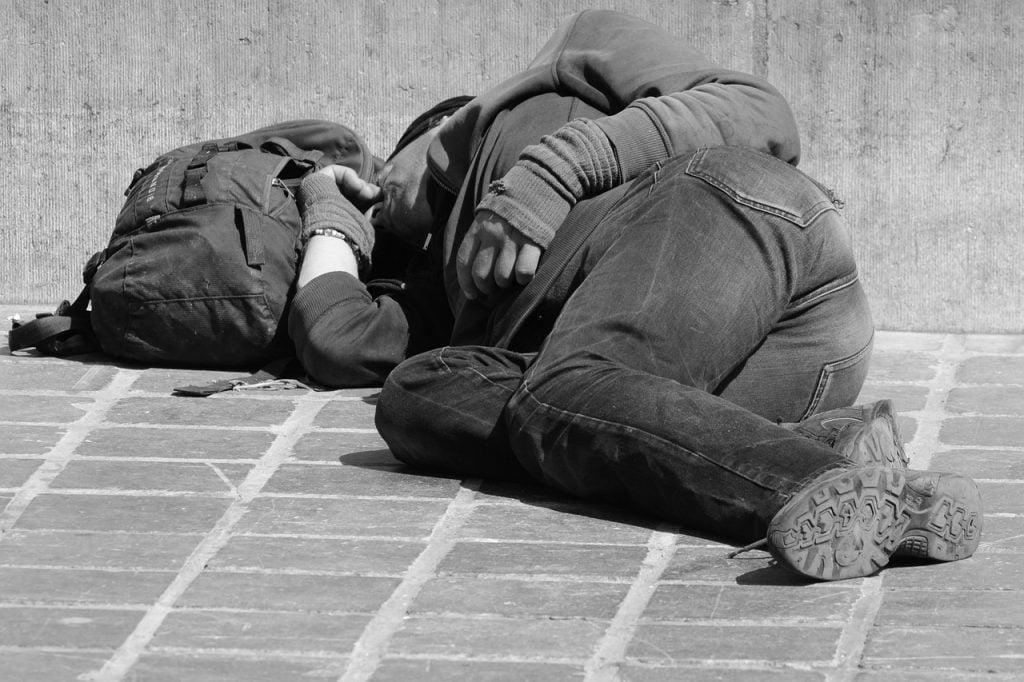
California will spend nearly $30 million to build 1,200 tiny homes across the state this year, Gov. Gavin Newsom announced Thursday, part of a plan to help house the nation’s largest homeless population and address an issue part that has plagued the state during successive governor’s tenures. time in the office.
Homes as small as 120 square feet (11 square meters) can be put together in 90 minutes and cost a fraction of what it costs to build permanent housing. Newsom said the homes could make room to help clean up the homeless camps that have sprung up in the state’s major cities. Federal courts have ruled that cities cannot clear homeless camps if there are no shelter beds available.
“We need to focus more energy and precision on addressing the camps,” Newsome said. “There’s no humanity there. People are dying on our watch.
Newsom announced the plans in Sacramento on the first stop of a planned four-city tour, where he has promised to make major policy announcements on housing, health care and public safety. The tour is replacing the traditional State of the State address by the Governor.
Local leaders across the country have used tiny houses for years to house their homeless populations. In San Jose, a city of about 1 million people at the southern end of San Francisco Bay, Mayor Matt Mahan said the city has installed 500 tiny homes in the past three years. He noted that the city’s homelessness rate has dropped from 84% to 75%, the first decline in many years.
“If you look at places around the world that have overcome this challenge, it is because they have increased the number of safe places for people to go,” he said.
But critics said Newsom is spending more money on things that aren’t doing enough to help. Since taking office in 2019, Newsom has signed off on more than $22.3 billion in new spending on housing and homelessness programs. California’s homeless population has increased by 6% since 2020, compared to a 0.4% increase in the rest of the country, according to an analysis of federal data by the Public Policy Institute of California.
California now has nearly a third of all homeless people in the United States.
“This is just another Band-Aid on a crisis that’s spiraling out of control in California,” said Brian Jones, the Republican leader of the state Senate. “We know that throwing money at this problem doesn’t work.”
Sacramento will get 350 homes. Los Angeles will get 500, San Jose 200 and San Diego 150. While the state is paying to build and set up the houses, local governments will be in charge of maintaining them. This includes deciding where to place them. According to the governor’s office, homes will have electricity but no plumbing, water or cooking equipment.
Bob Erlenbush, executive director of the Sacramento Regional Coalition to End Homelessness, called Newsom’s proposal a “modest step forward.” He estimated that homes in Sacramento would be sufficient for approximately 10% of the city’s homeless population.
“I wish elected officials, not only governors but up and down the state, would have a broader perspective in terms of trying to approach our homelessness crisis and affordable housing crisis with a sense of scale rather than a 10% solution,” he said.
Newsom acknowledged the criticism Thursday, saying he knows progress is not happening fast enough. He said tiny houses aren’t the solution, but they can help.
“It’s not just about sweeping things under the rug or kicking people off the streets and sidewalks and claiming a job well done,” Newsom said. “It doesn’t do it justice.”
California’s homelessness problem is partly a byproduct of a lack of affordable housing, an issue that advocates say affects many more people than just those living on the streets.
Nathan Aveler, 18, said he has struggled with unstable housing for most of his life. Evalar grew up with her mother and twin brother in the Central Valley town of Merced, where she said there is plenty of new housing but all are out of reach.
For a few years, they lived in a house that was infested with mold, which aggravated his brother’s asthma and forced him to leave. They moved in with their grandmother; If not for her home, which they often shared with several other family members, Avelar said they might have been homeless.
“I remember so many times we would drive around looking for houses, and we always saw these nice houses on the street and I knew we would never be able to afford them,” he said. “It was really disappointing.”
Evaler, who worked part-time for a voter engagement group that supported Newsom during his failed 2021 reelection effort, said he wants the governor’s administration to build more affordable housing.
Leaders of the state’s largest cities and counties want Sacramento to more clearly define their roles in addressing homelessness and how the state will measure the success of local programs that receive state funding.
Currently, state homelessness funding has “all kinds of regulations that have to be factored into half a dozen different state departments to find a program,” said Graham Knaus, executive director of the California State Association of Counties. “It needs to change. This is not the government at its best.
The association’s solution is to ask the state legislature to pass laws clearly defining local and state government responsibilities, along with recurring state funding for local governments each year. Knaus said the union is talking with lawmakers and the governor’s office about passing the law.
“We certainly shouldn’t expect that we’re going to make progress on homelessness using lump sum money to do it,” he said.