When North Carolina banned transgender people from using bathrooms of their gender identity in public buildings in 2016, California banned state-funded travel and joined any other state with laws as discriminatory against LGBTQ people.
But seven years later, following increased anti-LGBTQ legislation in most Republican-led states, California now bans state-funded travel in nearly half of the country.
The prohibition means that sports teams at public colleges and universities in states such as Arizona and Utah must find other ways to pay for road games. And it has complicated some of the state’s other policy goals, such as using state money to pay for people living in other states to travel to California for abortions.
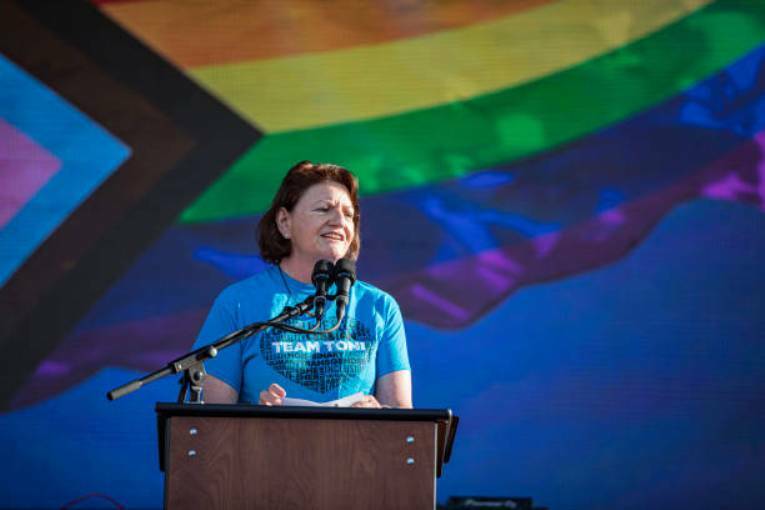
On Wednesday, State Senate Leader Tony Atkins announced legislation that would repeal the ban and replace it with an advertising campaign in those states that promotes acceptance and inclusion for the LGBTQ community. The bill would establish a fund to pay for the campaign, which would accept private donations and state funding – if any were available.
“I think the polarization is not working,” said Atkins, who is gay. “We need to adjust our strategy. We know what we have to do, but we need to be able to do it.”
Overturning the ban could be difficult in the California Legislature, where 10% of lawmakers now identify as LGBTQ. Assemblyman Evan Low, a Democrat from Campbell who authored the travel ban in 2016, said he supports the ad campaign but added that “we need to continue with California’s state-funded travel ban without taking alternative actions to combat discrimination.” should not be completely abolished.
“We cannot hold back, especially as a record amount of anti-LGBTQ+ legislation is being introduced,” said Low, who is gay.
California’s travel ban has been in effect since 2017. State attorneys general keep a list of states subject to the ban, a list that has grown rapidly as many states have passed laws that bar doctors from providing gender-affirming care to minors and transgender women. and preventing girls from participating in school sports in line with their gender identity.
Today, the ban covers 23 states: Alabama, Arizona, Arkansas, Florida, Georgia, Idaho, Indiana, Iowa, Kansas, Kentucky, Louisiana, Mississippi, Montana, North Carolina, North Dakota, Ohio, Oklahoma, South Carolina, South Dakota , Tennessee, Texas, Utah and West Virginia.
The law applies to state agencies, departments, boards, authorities and commissions – including schools that are part of the University of California and California State University systems.
This means that schools such as the University of California, Berkeley, cannot use state money for their football teams to travel to away games in Arizona and Utah—the schools must play against it because they are in the same athletic conference. are in
The San Diego State University men’s basketball team will play Saturday in the Final Four in Houston, a state that is on the no-travel list. The team escaped the ban because the NCAA, not California taxpayers, are footing the bill for the team’s travel. But the ban means the school cannot schedule football games against teams in Texas, said Jamie McConaughey, San Diego State’s senior associate athletic director of communications and media relations.
There are several exceptions to the law, including travel required to enforce California laws, fulfill contractual obligations or obtain grant funds. It also allows travel to protect health and safety, which is why a state-funded security detail may travel with the government. Gavin Newsom’s family was on vacation to Montana last year.
But it has complicated some of the Democrats’ policy goals in surprising ways. Last year, the US Supreme Court in Roe v. After overturning Wade, California agreed to spend $20 million to help women from other states move to California for abortions.
“We can help someone get to California or travel, but when they had to go back to Texas or Florida or whatever state, we can’t actually legitimately spend the money to send them home,” Atkins said. . “It starts to get complicated.”
Atkins said she would formally introduce the legislation on Thursday, which must be vetted by lawmakers in both the state Senate and the state Assembly before it can become law – a process that will likely take several months.
Greg Wallis, a Republican assembly member from Bermuda Dunes, said, “When you disagree with someone, you should be trying to open their eyes to change hearts and minds, not pretend they don’t exist.” “I’m glad California is coming around to that approach.”
Mark Stein, a history professor at San Francisco State University who is gay and researches queer history, said he would like to hear from LGBTQ communities in other states before making a decision to support lifting the travel ban.
But Stein said he would like to see an exception made for social justice research. Shortly after California’s travel ban was put in place, he said he had trouble booking a trip to North Carolina soon after the travel ban went into effect, so he could research the case of a transgender woman who was arrested in the 1960s for sodomy. was arrested for.
Stein said the university eventually found a way to fund his research, but said barriers remain for other researchers, especially students studying for advanced degrees.
“I think that Ph.D. students in California are being discouraged from pursuing research projects that would require extensive travel to a list of states that is now almost half the country,” he said.