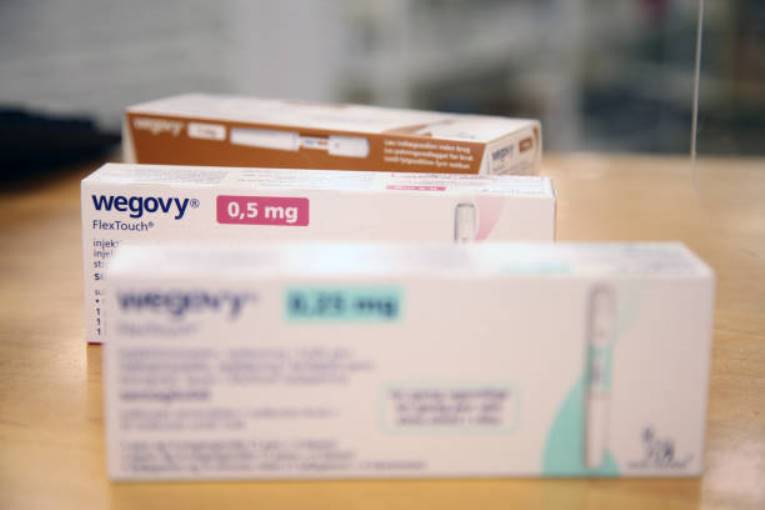
If a patient needs surgery or other operations that call for anesthesia on an empty stomach, they may experience life-threatening consequences if they use popular weight-loss medications like Wegovy or Ozempic. The advice issued last summer to stop taking the drug for up to a week might not be sufficient, however.
Even after adhering to the standard advice to stop eating for six to eight hours before the procedure, some anesthesiologists in the U.S. and Canada report seeing an increasing number of patients on weight-loss medications who inhaled liquids and food into their lungs while sedated since their stomachs were still full.
According to Dr. Ion Hobai, an anesthesiologist at Massachusetts General Hospital in Boston, the medications can impede digestion to such a degree that it puts patients at an increased risk for the issue known as pulmonary aspiration, which can result in catastrophic lung damage, infections, and even death.
Hobai, one of the first to raise the concern, said, “This is such a serious sort of potential complication that everyone who takes this drug should know about it.”
Between January and May, Wegovy and Ozempic prescriptions were written for about 6 million non-diabetic patients in the United States, according to Komodo Health, a provider of healthcare technology. The medications work by imitating the hormones that are released after meals and are predominantly found in the gut to cause weight loss. In addition, they slow the rate at which the stomach empties and target communication between the gut and the brain that regulate hunger and sensations of fullness.
The American Society of Anesthesiologists issued recommendations in June telling patients to forgo daily weight-loss drugs on the day of surgery and postpone weekly injections for a week prior to any sedative treatments. The group’s president, Dr. Michael Champeau, stated that the move was based on anecdotal accounts of issues, including aspiration, from throughout the nation.
How many people on anti-obesity medications may be impacted by the problem is unknown. But Hobai and a few of his coworkers decided to speak out because the effects may be so severe. In a paper published in the Canadian Journal of Anesthesia, they demanded that the medicine be discontinued three weeks before sedation.
That explains how long semaglutide, the substance that makes Wegovy work, stays in the bloodstream, according to Dr. Philip Jones, an anesthesiologist at the Mayo Clinic and the journal’s deputy editor-in-chief.
“Hopefully, everything should return to normal when 90% of it is gone, which is after three weeks,” Jones added.
Champeau and Jones agreed that there isn’t enough information to definitively state how long semaglutide should be kept to ensure anesthetic safety. According to Champeau, many people won’t visit doctors early enough to cease taking the medication three weeks before surgeries.
One in every 2,000 to 3,000 sedation-related procedures results in aspiration and nearly half of those patients experience a resulting lung injury. However, case studies suggest that semaglutide-treated patients had issues even when they stopped eating up to 20 hours before their surgeries.
Nothing indicates that if you fast for twice as long, it will be fine, said Champeau.
One of Hobai’s patients, a 42-year-old Boston male who had just started taking Wegovy, was among the reports describing potentially serious issues. He required intubation and developed respiratory failure, which landed him in intensive care. Despite having fasted for 18 hours, he aspirated the meal that was still in his stomach.
In Chapel Hill, North Carolina, a 31-year-old patient of low-dose Ozempic who underwent bariatric surgery last fall fasted for 10 hours before a routine endoscopy. The procedure had to be interrupted because she still had solid food in her stomach and was in danger of aspirating, according to the report.
Since then, as use of the weight-loss medicine has increased, medical professionals have encountered dozens of cases that are comparable, according to Dr. Elisa Lund, an anesthesiologist at the University of North Carolina at Chapel Hill School of Medicine. It has grown rapidly, she claimed.
Hobai is wrapping up retrospective research involving nearly 200 semaglutide-using patients. Although it won’t be released until later this year, the work has thus far seemed to support a modest Brazilian study, he said. In that trial, even after quitting the medication for 10 days, roughly a quarter of patients who were taking semaglutide still had food in their stomachs during operations requiring anesthesia.
The American Society of Anesthesiologists encourages physicians to treat patients who haven’t stopped taking the medication as though they had a full stomach, which may entail employing other sedation protocols or, if possible, delaying treatments. The need for research to update recommendations for physicians and patients, according to Jones, is critical.
The manufacturer of Ozempic, Wegovy, and related pharmaceuticals, Novo Nordisk, said that the company’s clinical trial and post-marketing safety data did not demonstrate that the pills caused aspiration. However, the pharmaceutical company pointed out that the drugs are known to induce delayed stomach emptying and that the labels include a disclaimer about potential gastrointestinal side effects.
Three weeks of no medicine can also have negative effects. According to Hobai, those trying to lose weight may gain some back, and diabetic patients may need an alternative method of blood sugar regulation.
Hobai advises patients taking Wegovy and other medications to discuss the dangers and advantages with their doctors prior to sedation.
“You will need to take some extra precautions if you’re taking this drug and you need an operation,” he warned.